

An Electric Sideloader (Bi-Directional) is a specialized type of forklift designed for handling long and bulky loads in tight spaces, making it an essential tool in warehouses and distribution centers where space efficiency is crucial. Unlike traditional forklifts that lift and move loads from the front, the sideloader features forks positioned to the side, allowing operators to pick up and transport materials without needing to maneuver the load in a cumbersome manner. This design is particularly beneficial for industries dealing with timber, steel, and other elongated materials. Popular variants include the single and double fork models, with bi-directional capabilities allowing operators to drive seamlessly in both directions, enhancing productivity and reducing the risk of collisions in confined settings. When considering the purchase of an Electric Sideloader, buyers should evaluate factors such as load capacity, battery life, maneuverability, and the specific applications for which the forklift will be used. These forklifts not only improve operational efficiency but also contribute to safer handling practices, making them a sound investment for businesses focused on optimizing their material handling processes.




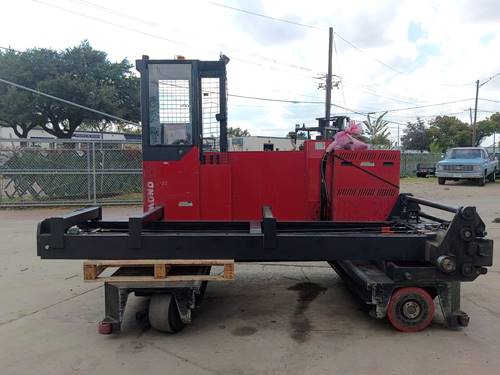


Bi-directional electric sideloaders are designed to handle long and heavy loads efficiently in narrow aisles. They provide excellent visibility for the operator when maneuvering, reducing the risk of accidents. Additionally, their electric motor offers lower operating costs and reduced emissions compared to gas-powered equipment, making them an environmentally friendly choice.
The electric sideloader is primarily designed for indoor use, especially in warehouse settings. While some models may be equipped for outdoor use, it is important to check the manufacturer's specifications. Generally, they perform best on flat, stable surfaces and may struggle in rough or uneven terrain.
The lifting capacity of electric sideloaders varies by model, but most can handle loads ranging from 2,500 to 6,000 pounds. It's crucial for buyers to assess their specific lifting needs and consult the manufacturer’s specifications to ensure the chosen model meets those requirements.
Maintenance for electric sideloaders is relatively low compared to traditional forklifts. Regular tasks include checking the battery, inspecting the forks for wear, maintaining the tires, and ensuring the electrical systems are functioning properly. Following the manufacturer's guidelines for maintenance and servicing will help prolong the lifespan of the equipment.
Your location is Columbus, OH. Modify


 Equipment

Copyright ©2026 Eliftruck.com, Inc.
TEL: +1 (800) 867-3675
FAX: +1 (208) 330-5961
INT’L: +1 (630) 759-4799

