
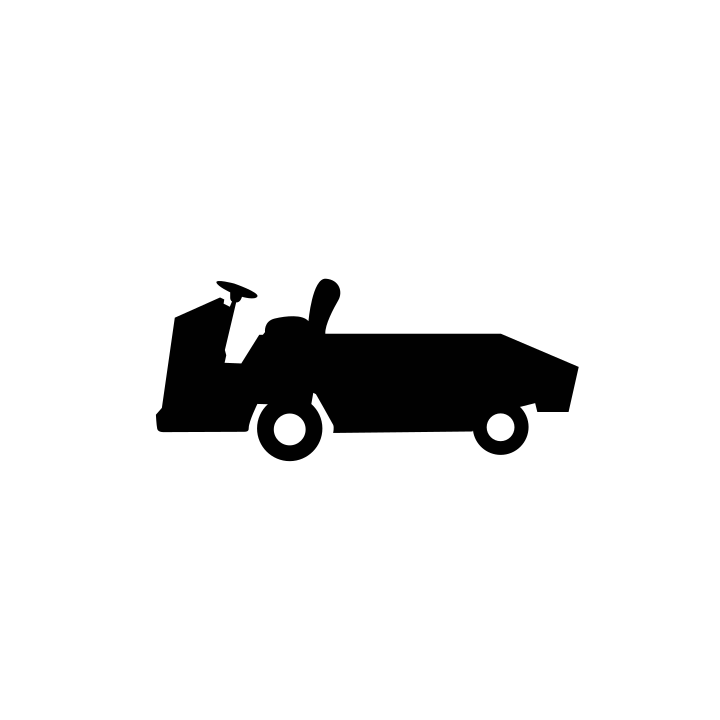
Personnel & Burden Carriers are unique types of material handling equipment typically used in warehouses, factories and industries where there's need for both personnel movement and cargo carriage. These versatile vehicles, also known as utility carts or industrial carriers, have been uniquely calibrated to move employees safely around large spaces while also accommodating heavy loads, improving both productivity and safety. They come in a variety of designs, including stand-up and sit-down models, providing different carrying capacities to meet your business's unique needs. The most popular types are electric, boasting zero emissions and low operation noise, which makes them ideal for indoor use in settings like hospitals, airports, and factories. Some considerations when purchasing personnel & Burden Carriers include determining the right type for your operations, the load capacity, maintenance costs, and the safety features it boasts. Practical, efficient, and versatile, Personnel & Burden Carriers are a crucial component for any business looking to streamline its internal transport needs for both people and goods.




Personnel & Burden Carriers are designed to transport both personnel and cargo efficiently within warehouses, manufacturing plants, and other industrial environments. They enhance productivity by allowing operators to move materials and team members quickly while reducing manual handling risks.
The maximum load capacity varies based on the model, but most Personnel & Burden Carriers can handle loads ranging from 1,500 to 8,000 pounds. It's important to check the specifications of each specific unit to ensure it meets your operational needs.
Yes, Personnel & Burden Carriers are designed to be user-friendly, featuring intuitive controls and ergonomic designs. Many models offer electric drive options that simplify operation and reduce operator fatigue, making them accessible for various skill levels.
When selecting a Personnel & Burden Carrier, look for essential safety features such as emergency stop buttons, non-slip surfaces, adequate lighting, seat belts, and stability controls. Ensuring the equipment is equipped with these safety measures helps minimize the risk of accidents in the workplace.
Your location is Columbus, OH. Modify


 Equipment
 Close
Close

Copyright ©2026 Eliftruck.com, Inc.
TEL: +1 (800) 867-3675
FAX: +1 (208) 330-5961
INT’L: +1 (630) 759-4799
