


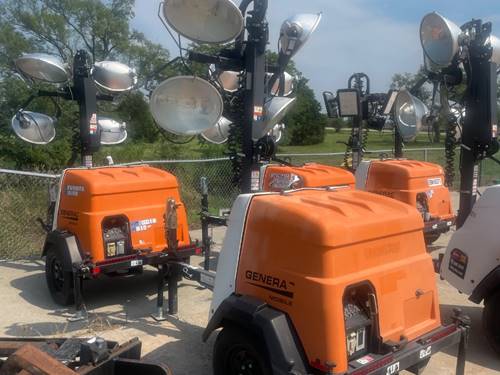
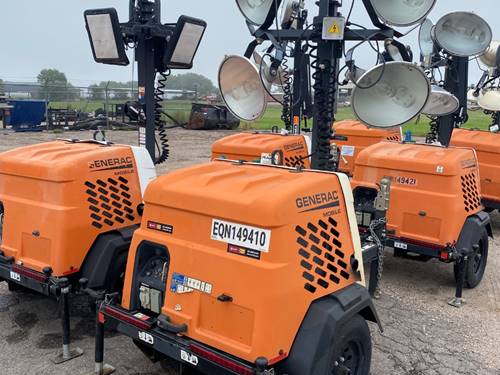
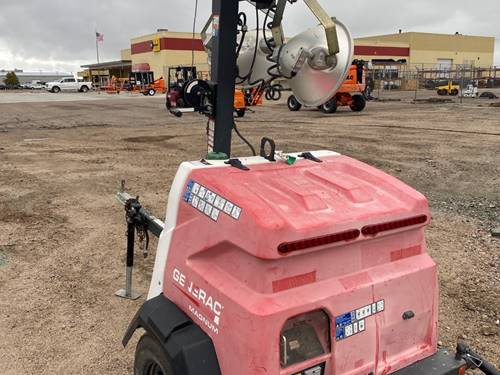
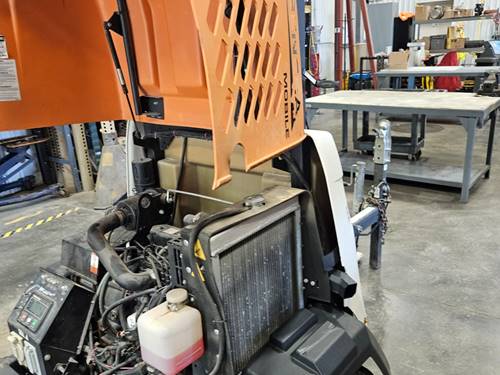
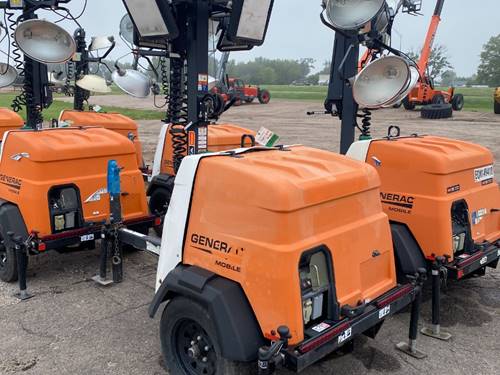
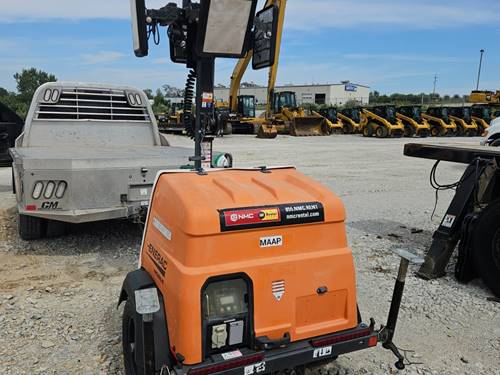
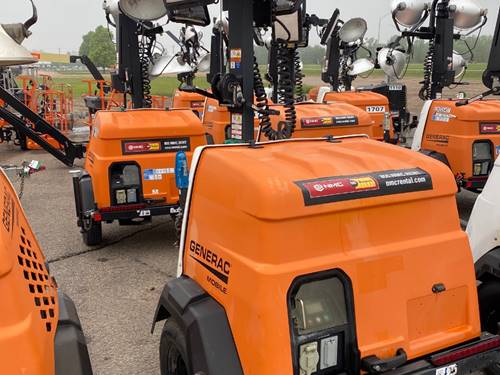
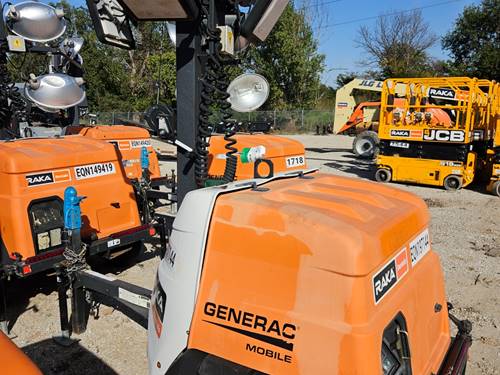
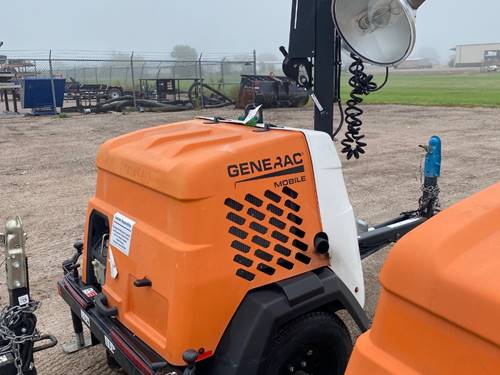
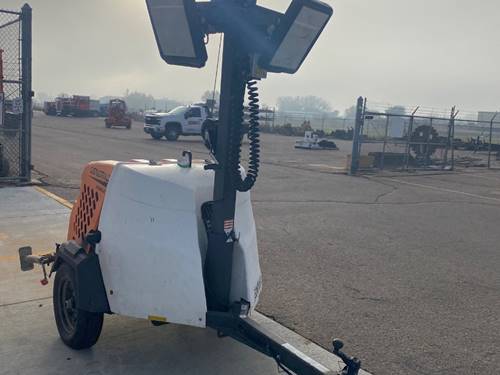
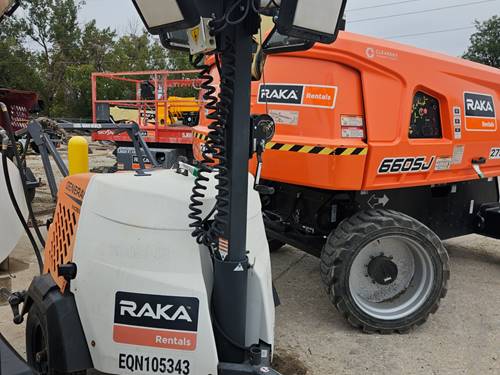
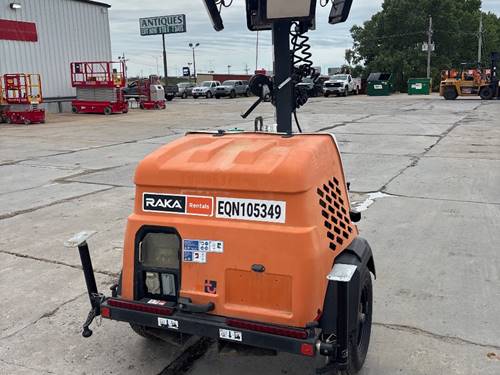
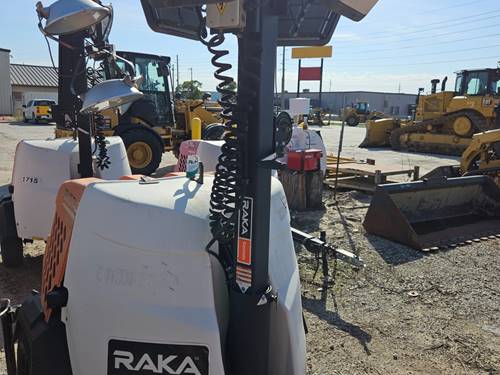
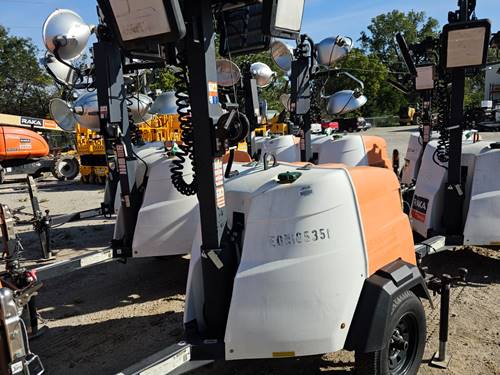
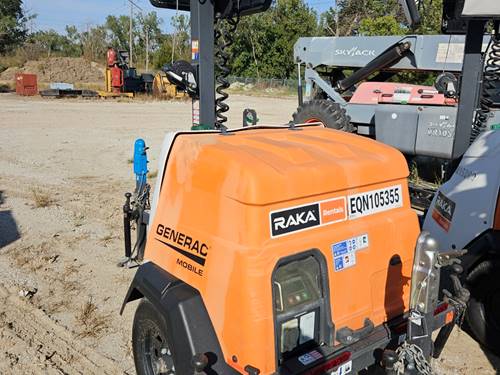
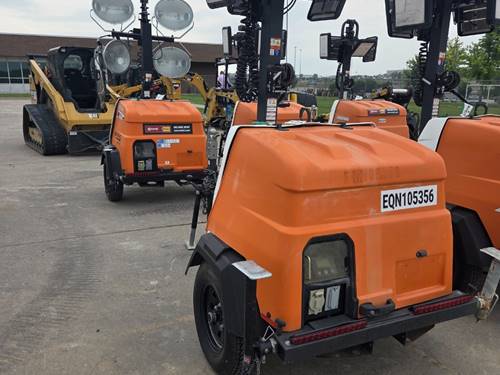
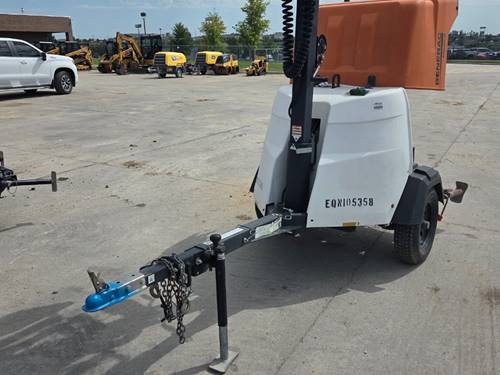
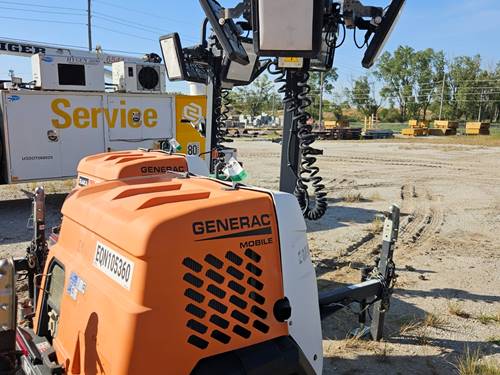
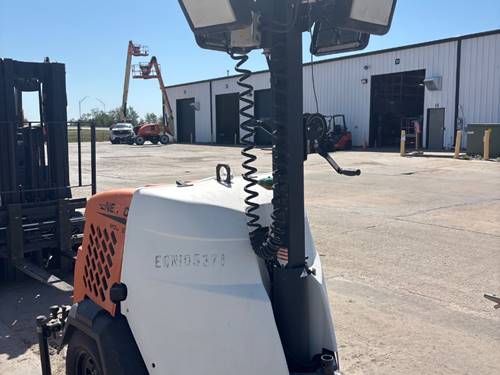
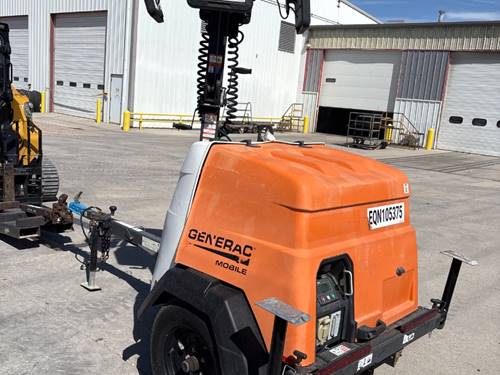
Most commercial light towers run on efficient diesel engines or solar/battery hybrid configurations. Diesel units typically feature large-capacity fuel cells that provide 50 to 70 hours of continuous runtime before requiring refuel, making them ideal for multi-day jobsites without daily servicing.
Modern light towers predominantly feature high-efficiency LED fixtures, which offer instant illumination with zero warm-up or cool-down cycles, lower power draw, and fixture life expectancies exceeding 50,000 hours. Traditional metal halide systems deliver high-intensity, warm-spectrum light at a lower initial purchase cost, though they require periodic bulb replacements and ballasts.
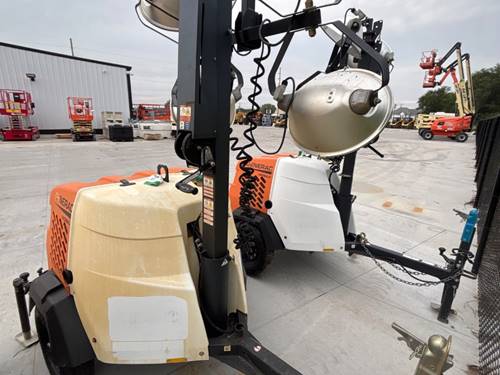
Standard vertical or horizontal masts reach working heights between 23 and 30 feet and can rotate up to 360 degrees for precise light placement. When fully deployed with the outriggers engaged and locked, most commercial-grade towers are engineered and rated to remain stable in winds up to 50 to 65 mph.
Yes, most diesel-powered light towers include auxiliary output receptacles (typically standard 120V and 240V convenience outlets) powered by the onboard generator. This allows you to power hand tools, chargers, and small jobsite trailers simultaneously while running the lights.
Your location is Columbus, OH. Modify


 Equipment
 Close

Copyright ©2026 Eliftruck.com, Inc.
TEL: +1 (800) 867-3675
FAX: +1 (208) 330-5961
INT’L: +1 (630) 759-4799
