
A 'Material Lift' in the context of an Aerial Work Platform (AWP) is a crucial piece of equipment designed to allow workers to perform tasks at significant heights, that would otherwise be risky or impossible to reach. Primarily utilized in construction, industrial or warehouse settings, this equipment safely lifts personnel, tools, and materials to specified heights, ensuring work efficiency and safety. Different types of Aerial Work Platforms include boom lifts, scissor lifts, and vertical masts, each designed with distinct features to suit various work conditions. Often hailed under aliases such as cherry pickers or skyjacks, the choice of material lift depends on factors like working height, outreach, load capacity and the environment it will be used in. Boom lifts provide excellent reach and flexibility, scissor lifts are great for working directly overhead with larger load capacity, whereas vertical masts are perfect for compact spaces that require height. When considering purchasing a material lift, factors you'd need to note besides price would be functionality, reliability, durability, and ease of use and maintenance. Selecting the right material lift thus means balancing these considerations, keeping the nature and needs of your work context front and center.


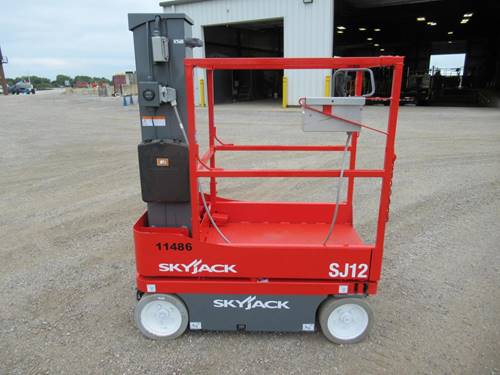

A material lift is a mechanical device designed to raise and lower heavy materials to elevated work areas. It typically features a platform that can be manually or electrically operated to lift loads, making it essential for construction, maintenance, and other tasks that require working at height.
The weight capacity of a material lift varies by model, typically ranging from 500 to 2,000 pounds. When selecting a lift, consider the heaviest materials you'll be using, along with the potential need for extra safety margins to ensure stability and safety during operation.
Yes, many material lifts are designed to be portable, featuring compact sizes and wheel systems for easy maneuverability. Some models are also collapsible or foldable, making them convenient for transportation between job sites.
Key safety features to look for include load limit indicators, safety brakes,??ing outriggers or bases, and emergency stop buttons. It's also important to ensure that the lift complies with relevant safety standards and regulations for your specific application.
Your location is Columbus, OH. Modify


 Equipment
Copyright ©2026 Eliftruck.com, Inc.
TEL: +1 (800) 867-3675
FAX: +1 (208) 330-5961
INT’L: +1 (630) 759-4799

