


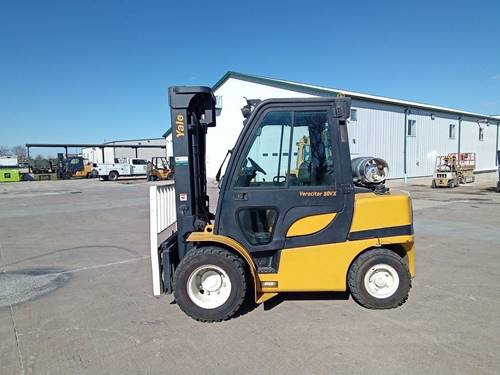
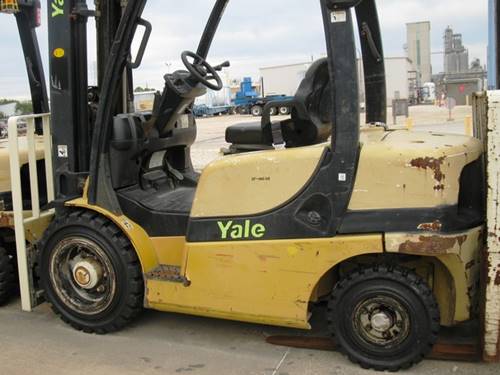
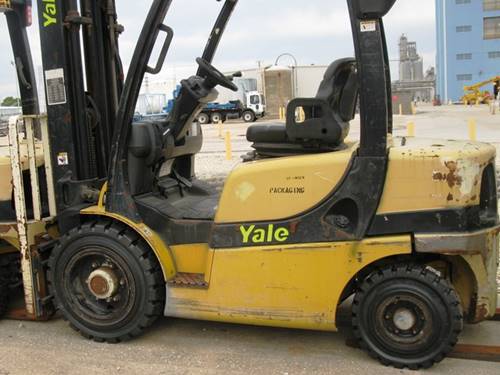
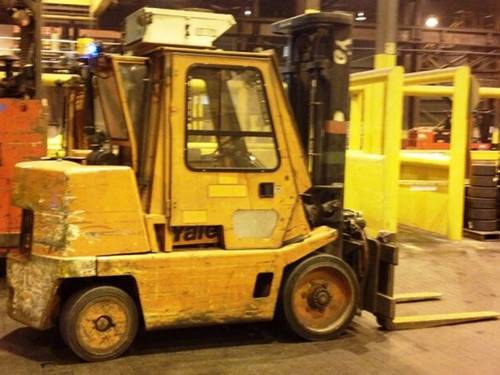
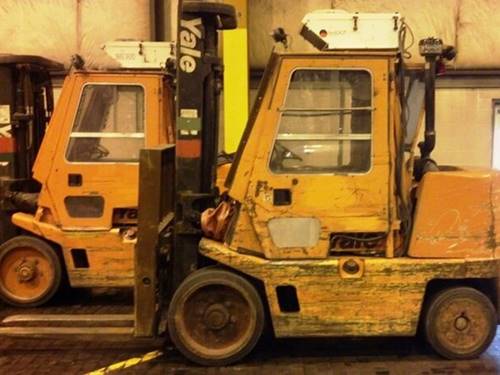
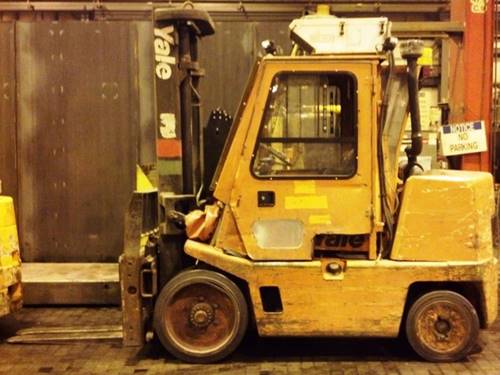
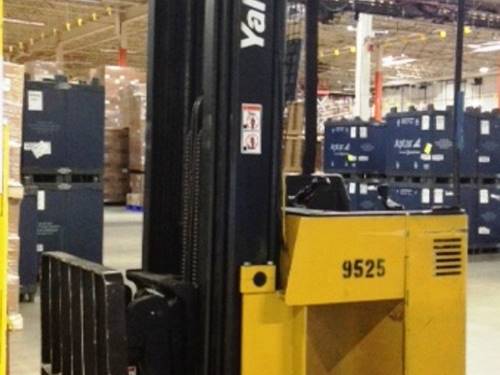
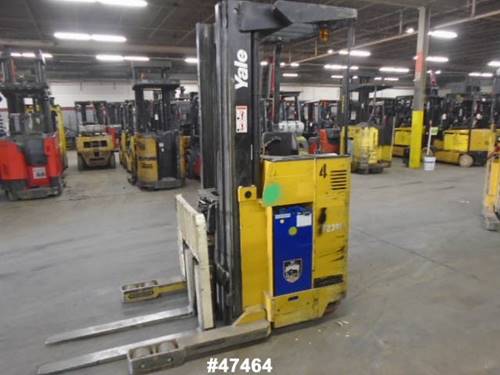
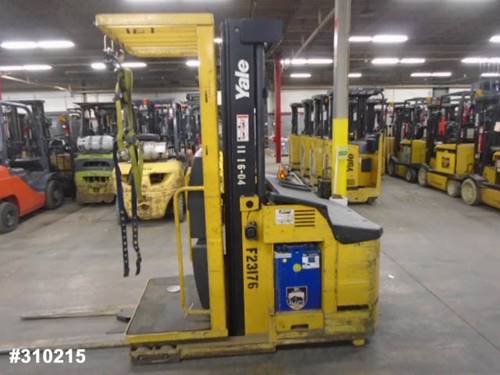
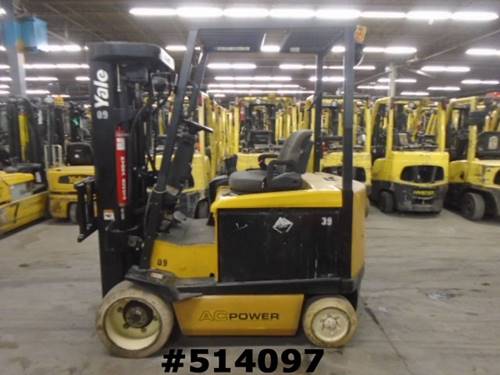
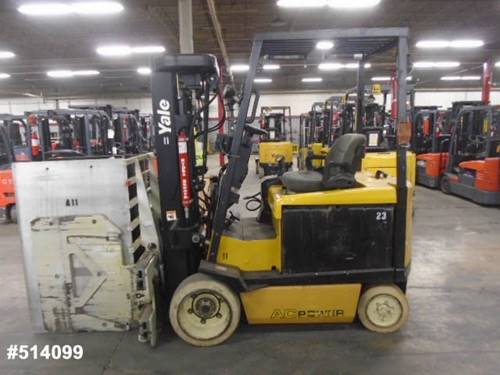
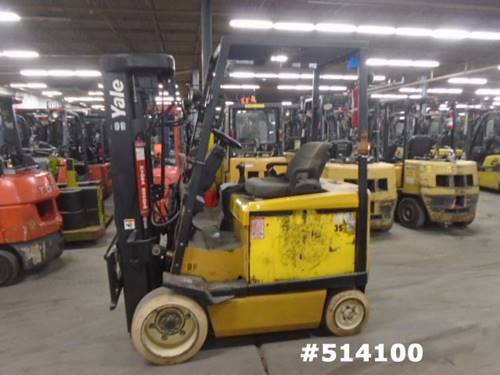
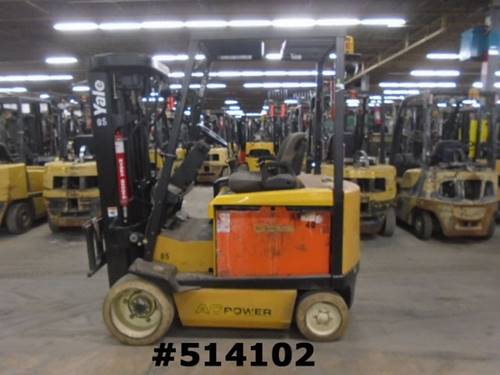
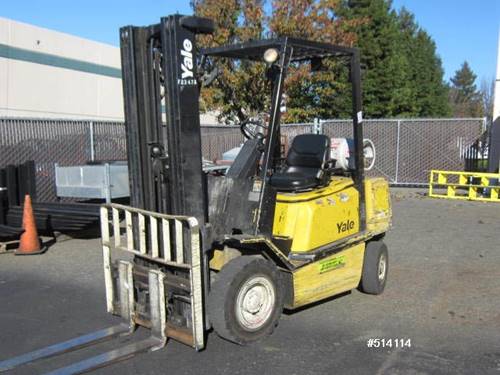
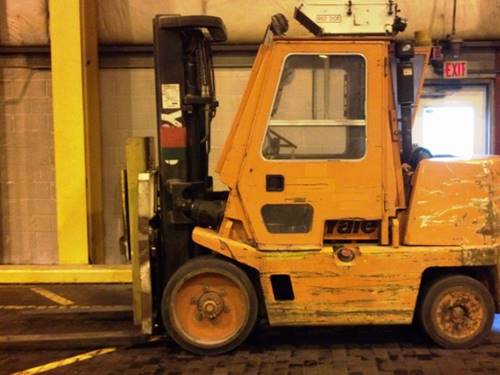
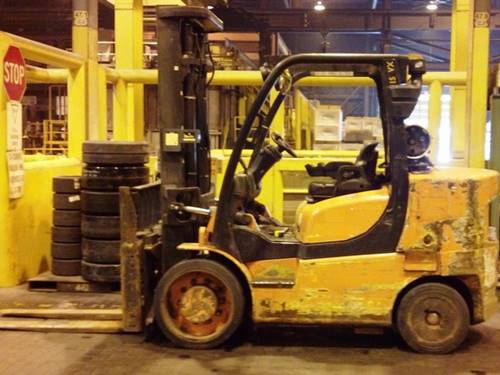
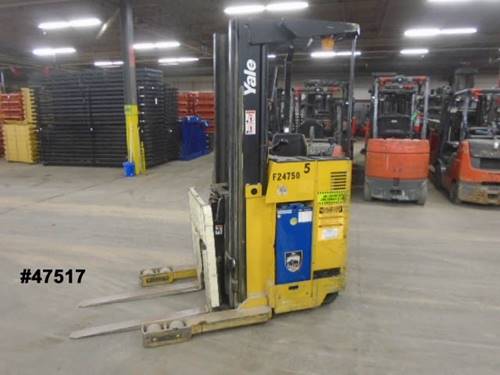
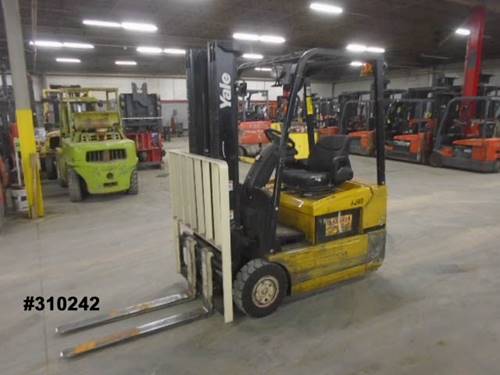
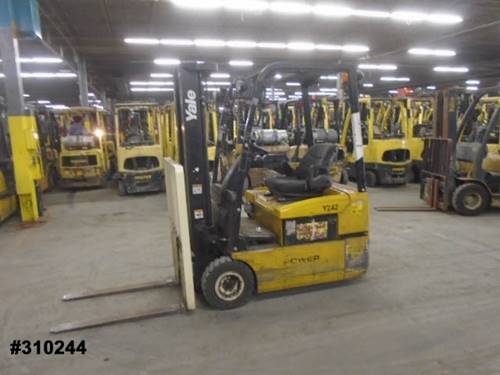
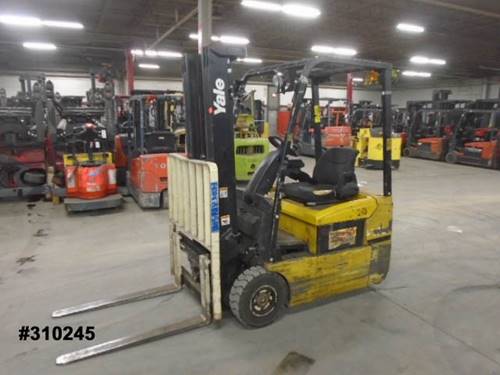
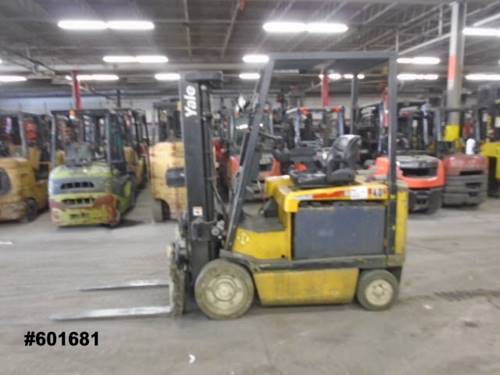
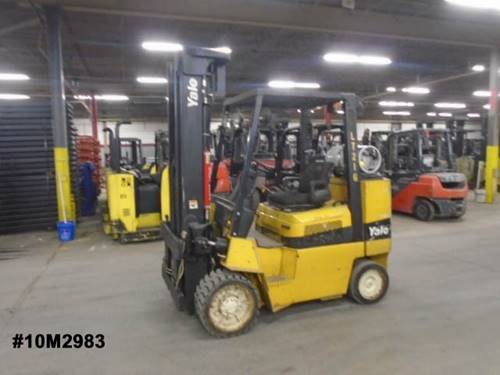
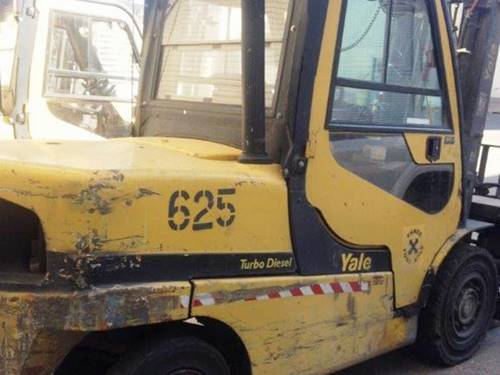
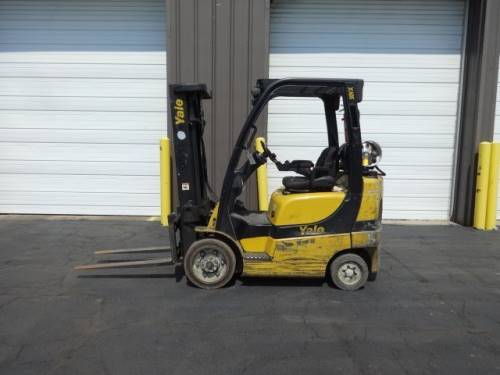
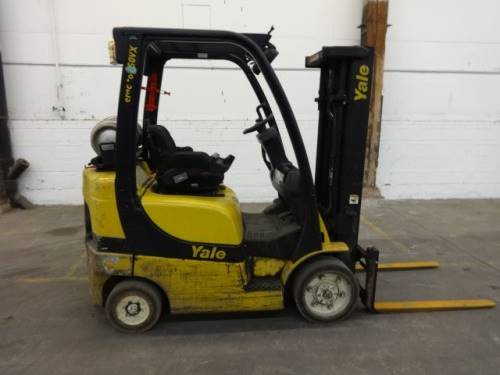
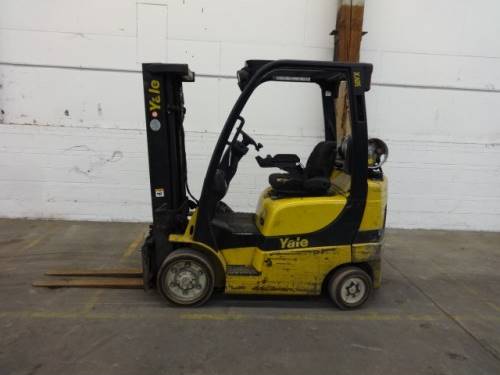
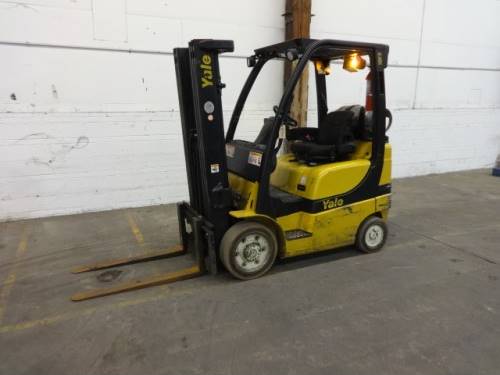
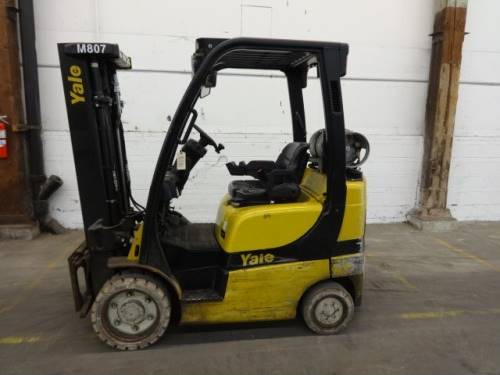
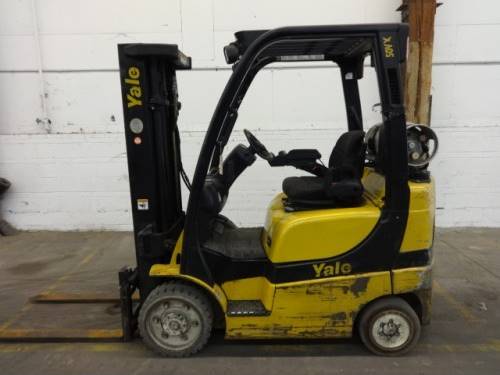
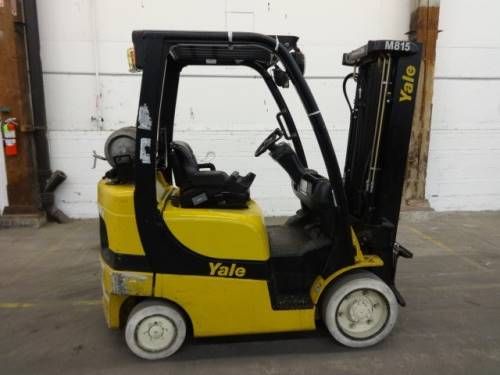
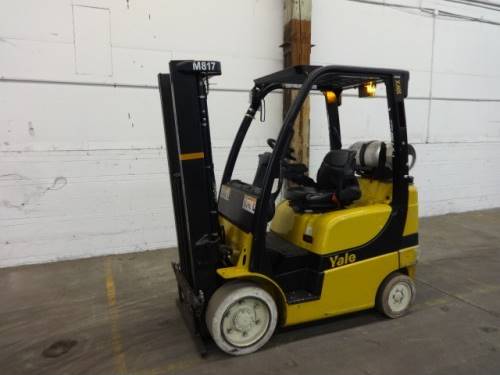
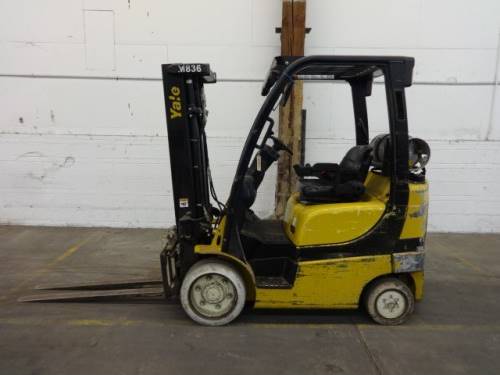
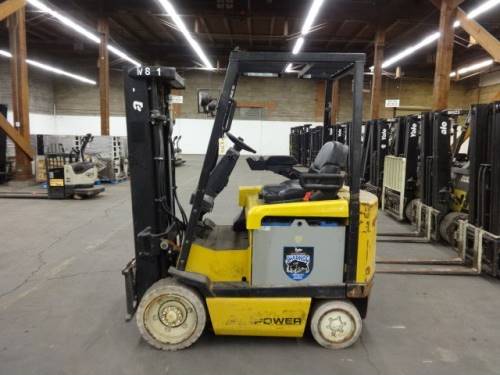
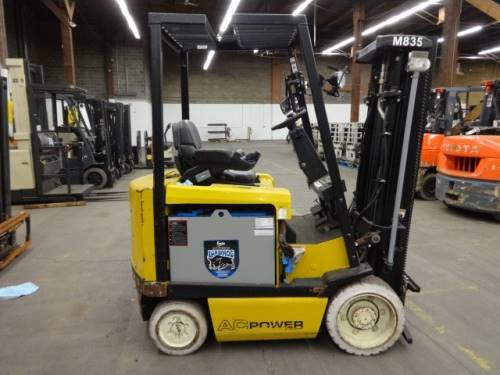
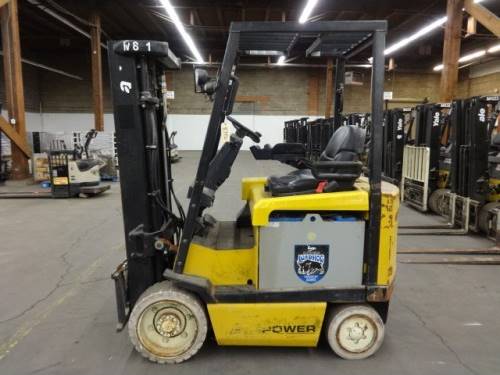
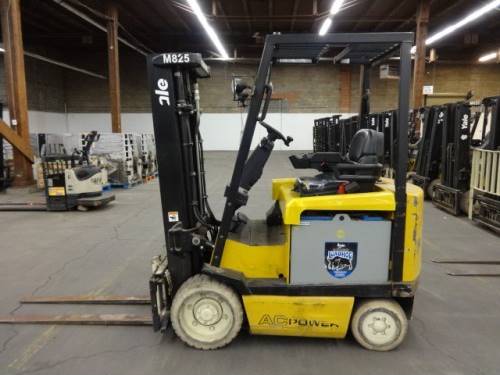
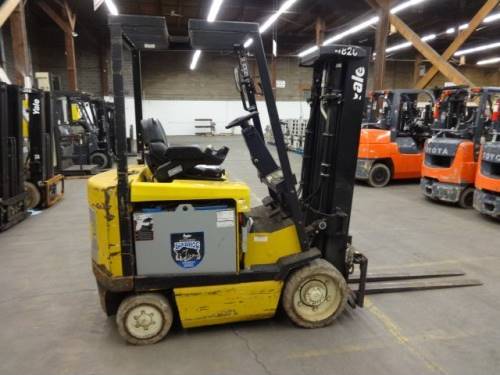
The Yale GLP080VXN is a robust pneumatic tire forklift designed for excellent performance in various environments. Key features include a four-wheel design for enhanced stability and maneuverability, especially in outdoor applications. It operates on LP Gas, which provides efficient fuel consumption and lower emissions compared to traditional diesel forklifts. The ergonomic design of the operator’s compartment ensures comfort during long shifts, while advanced hydraulic systems allow for smooth lifting and lowering operations.
The Yale GLP080VXN forklift has a maximum lifting capacity of approximately 8,000 pounds, making it suitable for heavy lifting tasks in warehouses, construction sites, and manufacturing facilities. This significant capacity allows for transporting large and heavy materials efficiently, reducing the need for multiple trips and enhancing productivity.
Operating on LP Gas, the GLP080VXN offers notable fuel efficiency compared to diesel-powered forklifts. LP Gas is known for producing fewer emissions, which not only benefits the environment but also contributes to lower operating costs for businesses. Additionally, the efficiency of the forklift’s engine means longer operational periods between refueling, enhancing productivity for users.
The Yale GLP080VXN requires regular maintenance to ensure optimal performance and longevity. Key maintenance tasks include routine checks of the hydraulic fluid, tire pressure, and overall system functionality. Additionally, it's important to follow the manufacturer's recommendations for servicing the engine and replacing components such as filters, spark plugs, and lubricants. Adhering to a scheduled maintenance plan will help prevent breakdowns and extend the life of the forklift.
Yes, training is essential for operating the Yale GLP080VXN safely and effectively. Operators should complete a certified forklift training program that covers topics such as load handling, stability, and safety regulations. Proper training helps minimize the risk of accidents, increases efficiency, and ensures compliance with workplace safety standards. Employers are encouraged to invest in training to protect both their workforce and equipment.
Your location is Columbus, OH. Modify


 Equipment
 Close
Close

Copyright ©2026 Eliftruck.com, Inc.
TEL: +1 (800) 867-3675
FAX: +1 (208) 330-5961
INT’L: +1 (630) 759-4799
