


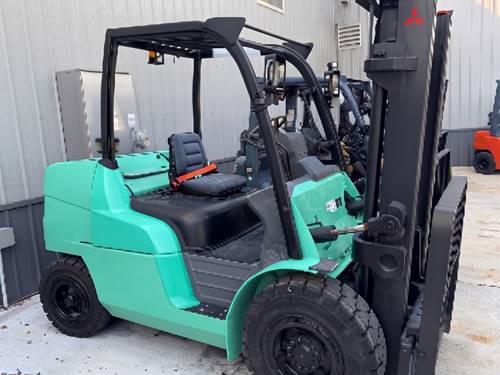
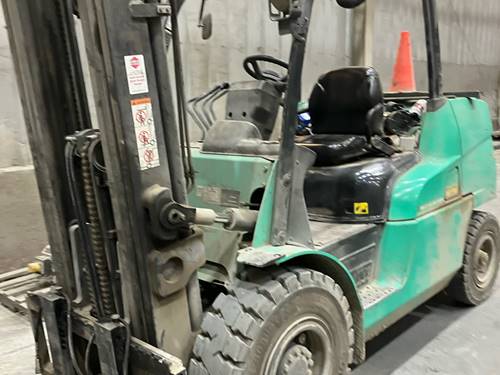


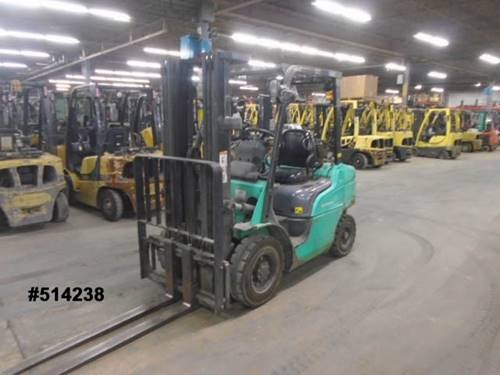
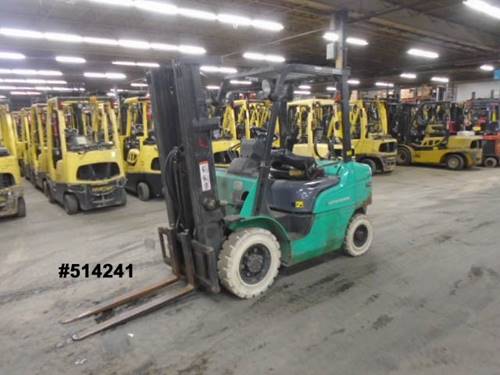

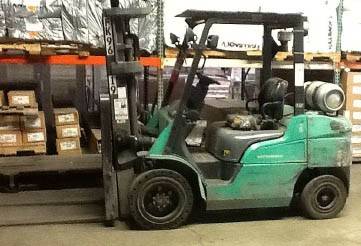


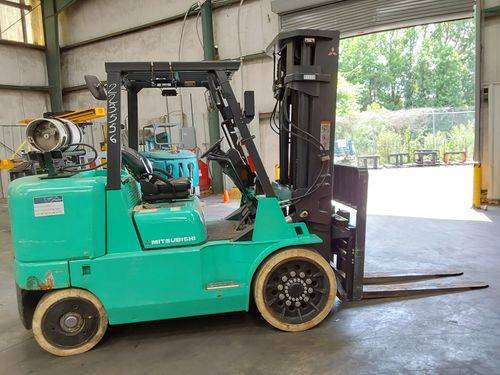
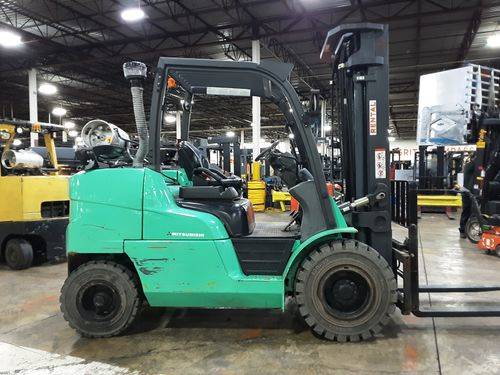
The Mitsubishi FD45 forklift, a robust model designed for heavy-duty applications, features a pneumatic tire configuration with four wheels and a sit-down design for operator comfort. This model is powered by diesel fuel, making it suitable for outdoor use in various industrial environments. Its impressive lifting capacity and reach make it an ideal choice for warehouses and construction sites where reliability and performance are paramount.
When operating the Mitsubishi FD45 forklift outdoors, it's essential to assess the terrain and weather conditions. The pneumatic tires provide excellent traction on uneven surfaces, but ensure that the load is balanced and within the forklift's lifting capacity to maintain safety. Additionally, be mindful of visibility when navigating in bright sunlight or adverse weather conditions, and always adhere to safety protocols to prevent accidents.
Regular maintenance is crucial for prolonging the lifespan of the Mitsubishi FD45 forklift. It is recommended to perform routine checks every 250 hours of operation, which include inspecting the hydraulic system, checking tire pressure, and examining the engine and fuel systems. Full servicing should be done at least once a year, or more frequently based on usage levels. Keeping a detailed maintenance log can help keep track of any issues and ensure consistent performance.
While the Mitsubishi FD45 forklift is primarily designed for outdoor applications due to its pneumatic tires and diesel fuel, it can be used indoors if the facility has adequate ventilation. However, this is generally not recommended for tight spaces or where emissions could be a concern. For indoor operations, consider models specifically designed for that environment, such as electric forklifts, to ensure safety and compliance with regulations.
Operators of the Mitsubishi FD45 forklift must undergo proper training that includes both theoretical and practical components. They should be familiar with forklift controls, understand load management, and be aware of safety procedures relevant to the operation of heavy machinery. Certification programs are often required to ensure that operators can handle the equipment safely and comply with occupational safety regulations.
Your location is Columbus, OH. Modify


 Equipment

Copyright ©2026 Eliftruck.com, Inc.
TEL: +1 (800) 867-3675
FAX: +1 (208) 330-5961
INT’L: +1 (630) 759-4799

