
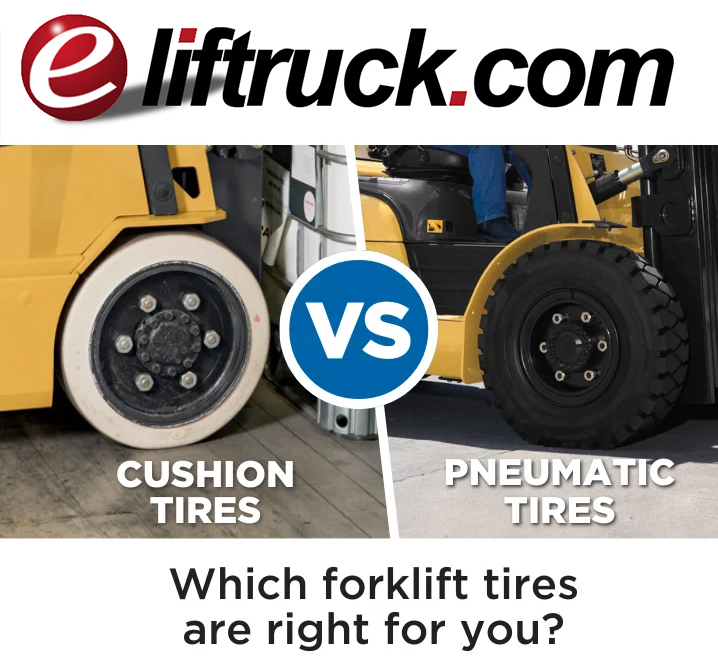
When you're looking to buy or rent a forklift, one of the most important - and often overlooked - decisions is which tire type to choose: cushion or pneumatic.
The wrong tire can make your forklift less efficient, wear out parts faster, and even create safety hazards for your operators.
In this comprehensive guide, we'll explain the key differences between cushion and pneumatic tire forklifts, including how they work, where they perform best, and how to decide which type fits your operation.
Why Tire Type Matters More Than You Think
Forklift tires aren't just about traction - they determine where your lift can safely operate and how long it lasts.
Think of tires as the "shoes" for your forklift. Just as you wouldn't wear dress shoes to a construction site, you shouldn't use the wrong tire for your facility.
The right tire improves:
So before you invest in a forklift, it's critical to understand which tire type your environment demands.
What Is a Cushion Tire Forklift?
Cushion tire forklifts use solid rubber tires mounted directly onto a metal band (the wheel). They are smaller and smoother than pneumatic tires, making them ideal for flat, indoor surfaces.
Key Features:
Best Environments for Cushion Tires:
Advantages:
Drawbacks:
Cushion tires are the standard choice for most indoor warehouse forklifts because they provide smooth operation, tight turns, and long-lasting durability when used correctly.
What Is a Pneumatic Tire Forklift?
Pneumatic tire forklifts are built for outdoor or mixed-surface use. These tires look similar to those on trucks - larger, thicker, and air-filled (or solid rubber-filled) to absorb shock and handle rough ground.
Key Features:
Best Environments for Pneumatic Tires:
Advantages:
Drawbacks:
Pneumatic tire forklifts are the go-to choice for outdoor material handling, where traction, clearance, and stability matter more than compact turning.
Cushion vs. Pneumatic Tires: Side-by-Side Comparison
Feature | Cushion Tire Forklift | Pneumatic Tire Forklift |
Best Use | Indoor, smooth floors | Outdoor, uneven terrain |
Tire Material | Solid rubber | Air-filled or solid rubber |
Ground Clearance | Low | High |
Turning Radius | Tight | Wider |
Ride Comfort | Moderate | Softer, smoother |
Maintenance | Minimal | Higher (especially air-filled) |
Cost | Lower | Higher |
Surface Compatibility | Smooth, flat | Rough, uneven |
Solid Pneumatic Tires - The Hybrid Option
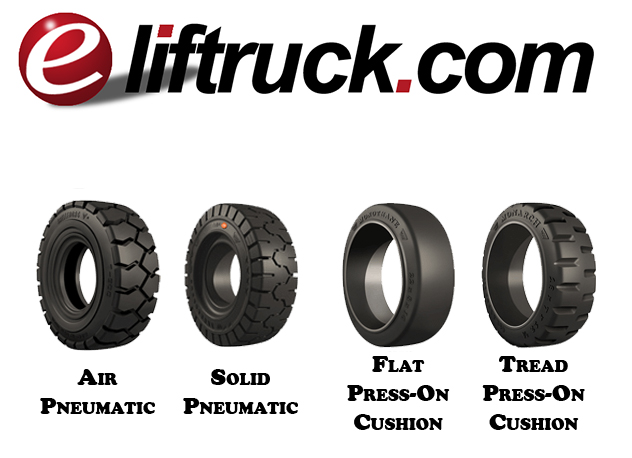
Some forklifts use solid pneumatic tires, which combine the durability of cushion tires with the outdoor performance of pneumatic ones.
They're made of solid rubber molded into a pneumatic shape, offering:
They're ideal for heavy-duty or mixed indoor/outdoor operations, such as loading docks or lumber yards where floors transition from smooth to uneven.
How Tire Type Affects Forklift Design
The tire type isn't just about performance - it actually determines the entire design of the forklift chassis.
Cushion and pneumatic forklifts are not interchangeable. You can't simply swap tires because:
So, when buying a forklift, decide your tire type before finalizing the model.
Real-World Examples
If you occasionally move between environments, you might consider electric pneumatics or solid pneumatics for flexibility.
Energy Efficiency and Wear Considerations
Tire type even impacts fuel efficiency and power consumption:
Improper tire use (like running cushion tires outdoors) causes:
Always match the tire type to your working surface to protect your investment.
Maintenance Tips
For Cushion Tires:
For Pneumatic Tires:
Proper tire maintenance extends forklift life and ensures safe operation.
Which One Should You Choose?
Here's a quick decision guide:
Choose Cushion Tires if you:
Choose Pneumatic Tires if you:
If you're unsure, talk with an equipment specialist who can match your forklift to your exact working environment.
Find the Right Forklift for Your Business at Eliftruck.com
At Eliftruck.com, we make it easy to find the perfect forklift for any environment - from cushion-tire warehouse units to heavy-duty pneumatic outdoor lifts.
Search by:
We connect you with trusted dealers nationwide, featuring thousands of new and used forklifts, attachments, and parts.
Final Thoughts
The difference between cushion and pneumatic tire forklifts comes down to where and how you work. Cushion tires dominate the warehouse; pneumatics rule the yard.
Choosing the right type ensures:
Whether you're replacing an old unit or expanding your fleet, start your search today at Eliftruck.com - your nationwide source for quality used forklifts and material handling equipment.
 Equipment
 Close
Close

Copyright ©2026 Eliftruck.com, Inc.
TEL: +1 (800) 867-3675
FAX: +1 (208) 330-5961
INT’L: +1 (630) 759-4799
