
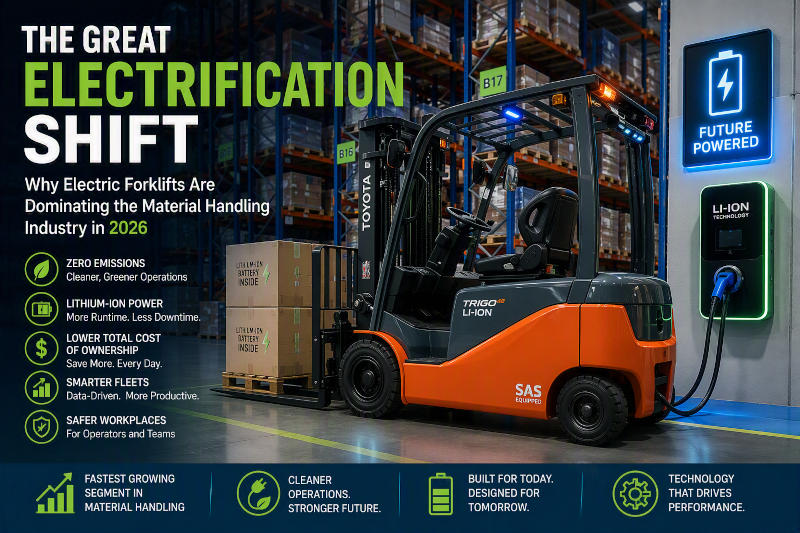
Introduction
The material handling industry is undergoing a historic transformation in 2026, and one trend is rising above nearly every other discussion among warehouse operators, equipment dealers, logistics professionals, and fleet managers: the rapid adoption of electric forklifts.
Just a decade ago, internal combustion forklifts powered by diesel, LPG, and gasoline dominated many warehouses and industrial operations. Today, the conversation has shifted dramatically. Businesses across warehousing, manufacturing, distribution, food processing, retail logistics, and e-commerce fulfillment are replacing traditional forklifts with electric models at record rates.
What makes this trend particularly significant is that it extends far beyond environmental concerns. Companies are discovering that electric forklifts deliver measurable advantages in operating costs, maintenance expenses, productivity, operator comfort, safety, and long-term return on investment.
As September 2026 approaches, searches related to electric forklifts, lithium-ion batteries, warehouse sustainability, fleet electrification, and energy-efficient material handling equipment continue to grow. Buyers are actively comparing electric and IC forklifts as they plan future equipment purchases.
For organizations considering new forklifts, used forklifts, reach trucks, order pickers, pallet jacks, and warehouse equipment investments, understanding the electrification trend has become critical.
Why Electric Forklifts Are Gaining Market Share So Quickly
The shift toward electric forklifts did not happen overnight.
Several powerful market forces are pushing fleets toward electrification.
Rising Fuel Costs
Fuel remains one of the largest operating expenses for many forklift fleets.
Organizations operating diesel and LPG equipment face:
Electric forklifts eliminate fuel-related costs and provide far more predictable operating expenses.
This financial stability has become increasingly attractive to warehouse operators looking to reduce long-term costs.
Labor Efficiency Matters More Than Ever
Warehouse labor continues to be one of the largest expenses in logistics operations.
Every minute that a forklift is unavailable due to maintenance, refueling, or unexpected breakdowns impacts productivity.
Electric forklifts help reduce downtime by offering:
When managers can keep more lift trucks operating consistently, overall warehouse productivity improves.
The Lithium-Ion Battery Revolution
One of the biggest reasons electric forklifts are exploding in popularity is the advancement of lithium-ion battery technology.
Historically, lead-acid batteries created several limitations:
Modern lithium-ion systems have changed the game entirely.
Advantages of Lithium-Ion Forklift Batteries
Lithium-ion forklift batteries provide:
Many warehouses now operate electric forklift fleets for multiple shifts without battery swaps.
This capability has dramatically improved adoption rates among high-volume operations.
Electric Forklifts Are No Longer Limited to Indoor Applications
One of the most common misconceptions about electric forklifts is that they are only designed for warehouse use.
That is no longer true.
Modern electric forklift technology is being successfully deployed in:
Improved battery capacity and increased power output allow electric forklifts to perform tasks once considered exclusive to internal combustion equipment.
This expansion into heavier-duty applications has accelerated market adoption.
Lower Maintenance Costs Are Driving Fleet Conversions
Equipment managers are paying close attention to maintenance expenses.
Internal combustion forklifts contain numerous components requiring regular service.
Examples include:
Electric forklifts eliminate many of these maintenance requirements.
As a result, fleet operators often experience:
The cumulative savings become substantial when fleets contain dozens or even hundreds of forklifts.
Sustainability Goals Are Influencing Purchasing Decisions
Many organizations have established environmental targets for 2026 and beyond.
Customers increasingly evaluate vendors based on sustainability initiatives.
Warehouse operators are responding by investing in:
Electric forklifts support these initiatives by helping companies lower emissions while enhancing operational efficiency.
For some businesses, fleet electrification has become a competitive advantage when pursuing new contracts and customers.
The Rise of Smart Electric Forklifts
Today's electric forklifts offer much more than battery-powered operation.
New equipment often includes advanced technology such as:
Telematics Systems
Telematics provide visibility into:
Predictive Maintenance
Smart systems can detect potential issues before failures occur.
This helps organizations:
Fleet Optimization
Managers can identify:
Technology is transforming electric forklifts into intelligent productivity tools rather than simple warehouse vehicles.
Used Electric Forklifts Are Becoming Hot Commodities
Growing demand for electric equipment has also increased interest in the used forklift market.
Many buyers seek:
Benefits include:
As electric forklifts continue gaining popularity, buyers are actively searching online marketplaces for quality pre-owned inventory.
This trend is creating significant opportunities for equipment dealers nationwide.
Which Industries Are Leading the Electrification Movement?
Virtually every material handling sector is experiencing electrification.
However, several segments are leading adoption rates.
E-Commerce Fulfillment Centers
Fast-paced fulfillment operations prioritize:
Electric forklifts align perfectly with these objectives.
Food and Beverage Warehousing
Indoor environments benefit from:
Manufacturing Facilities
Manufacturers value:
Third-Party Logistics Providers
3PL companies increasingly view electric equipment as essential for maximizing profitability.
What Buyers Should Consider Before Purchasing an Electric Forklift
Organizations evaluating forklifts should examine several key factors.
Application Requirements
Consider:
Battery Technology
Compare:
Total Cost of Ownership
The purchase price is only one part of the equation.
Buyers should evaluate:
Dealer Support
Strong dealer relationships remain essential for:
Why Online Equipment Marketplaces Are Playing an Increasingly Important Role
As buyers research electric forklift options, online marketplaces continue gaining influence.
Modern buyers want the ability to compare:
Marketplaces provide access to inventory from multiple dealers, making it easier to identify the right equipment solution.
Buyers can compare specifications, pricing, locations, and equipment options before making purchasing decisions.
Future Trends to Watch in 2027 and Beyond
Industry experts expect continued growth in:
As technology continues advancing, electric forklifts will become even more efficient, productive, and cost-effective.
The organizations that adapt early will likely gain significant operational advantages.
Conclusion
The electrification of the material handling industry is one of the most important equipment trends defining 2026.
Electric forklifts are no longer viewed as niche warehouse vehicles. They have become mainstream solutions capable of serving warehouses, manufacturing facilities, distribution centers, logistics companies, and industrial operations of every size.
Organizations are embracing electric forklifts because they deliver lower operating costs, reduced maintenance requirements, improved productivity, advanced technology integration, enhanced workplace safety, and support for sustainability initiatives.
For buyers searching for forklifts for sale, used forklifts, warehouse equipment, material handling equipment, reach trucks, pallet jacks, and complete fleet solutions, electrification should be a major consideration in future purchasing decisions.
Whether you're upgrading a single forklift or modernizing an entire fleet, electric equipment is rapidly becoming the preferred choice for businesses focused on long-term efficiency, operational excellence, and competitive advantage.
Explore electric forklifts, used forklifts, reach trucks, pallet jacks, warehouse equipment, and material handling solutions from dealers nationwide through Eliftruck.com, Inc., the trusted marketplace connecting buyers and equipment sellers across North America.
 Equipment
 Close
Close

Copyright ©2026 Eliftruck.com, Inc.
TEL: +1 (800) 867-3675
FAX: +1 (208) 330-5961
INT’L: +1 (630) 759-4799
